


• Home
  • About
  • Works
    • Photography
    • Videos + Films
    • Print + Mixed Media
    • Installations
    • Drawings
  • News
  • Contact
  • Home
  • About
  • Works
    • Photography
    • Videos + Films
    • Print + Mixed Media
    • Installations
    • Drawings
  • News
  • Contact

Photography

Evolve
Evolve
             
Resurgence: A Manifesto

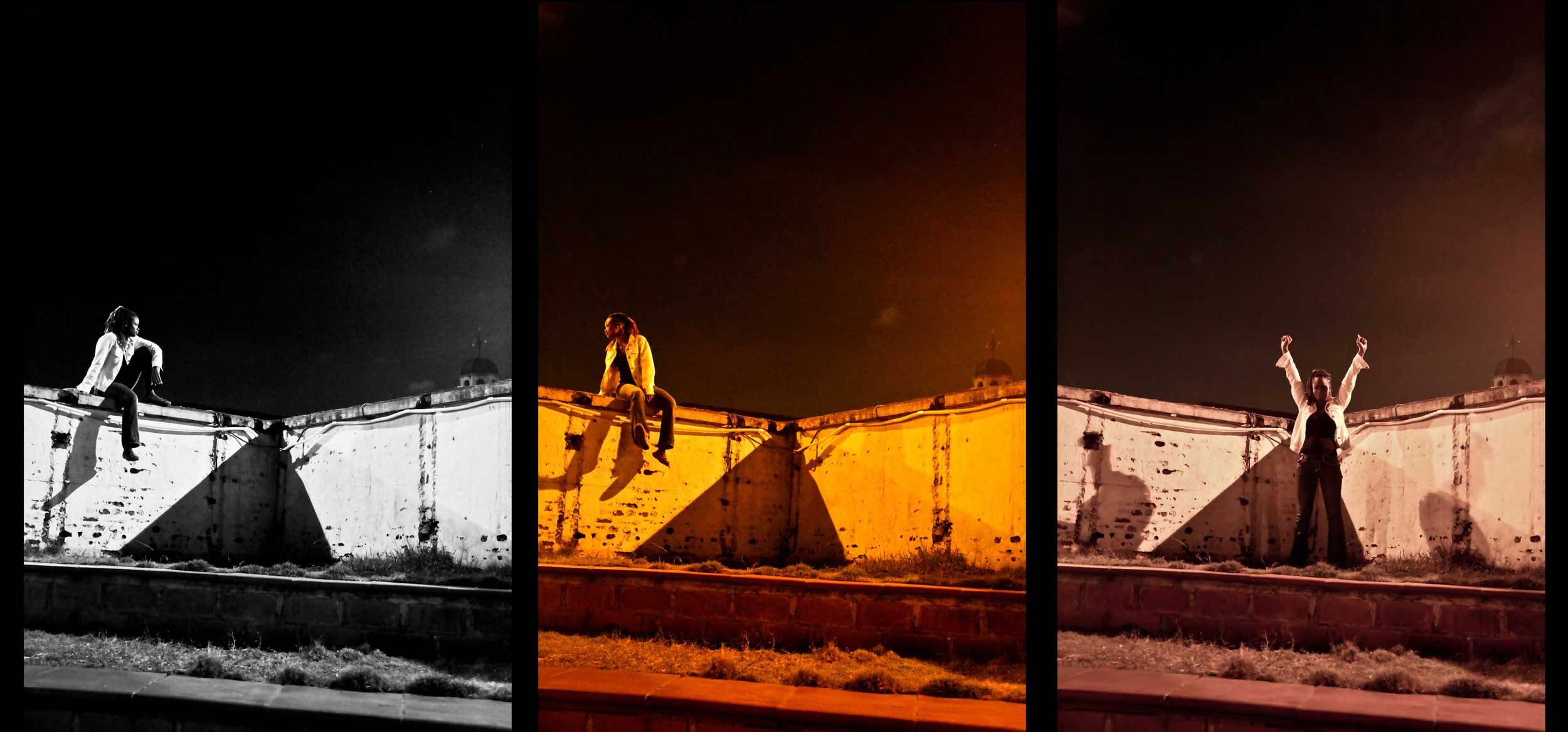
Resurgence: A Manifesto (2013) is a photographic performance series that confronts socio-political decay. It directly critiques the profound socio-economic and political dysfunction within Nigeria and, by extension, post-colonial Africa. By staging these performances within government facilities in Lagos, Olagunju’s work executes a deliberate reclamation of space. This act embodies a forthright crusade against mental colonization, aiming to shatter the inherited psychic shackles of colonialism.

The series focuses on the urgent need for a collective reawakening. It centers on the recovery of an autonomous identity, one systematically threatened by enduring epistemic violence and cultural erasure. Olagunju’s practice, however, transcends mere critique. By meticulously attending to form and symbol, she documents and catalyzes signs of possible resistance. Her work ultimately functions as a visual lexicon of defiance, offering a critical sense of hope grounded in the active reclamation of agency and historical narrative.

Paths and  Patterns
Paths and Patterns
Humans like objects become set in PATHS, embedded in a constrained reality and as they travel, the possible future which was once infinite collapses to one unchangeable and inescapable outcome. Some call it fate; others destiny…
Beautiful Decay
Beautiful Decay
                           
Redemption
Redemption

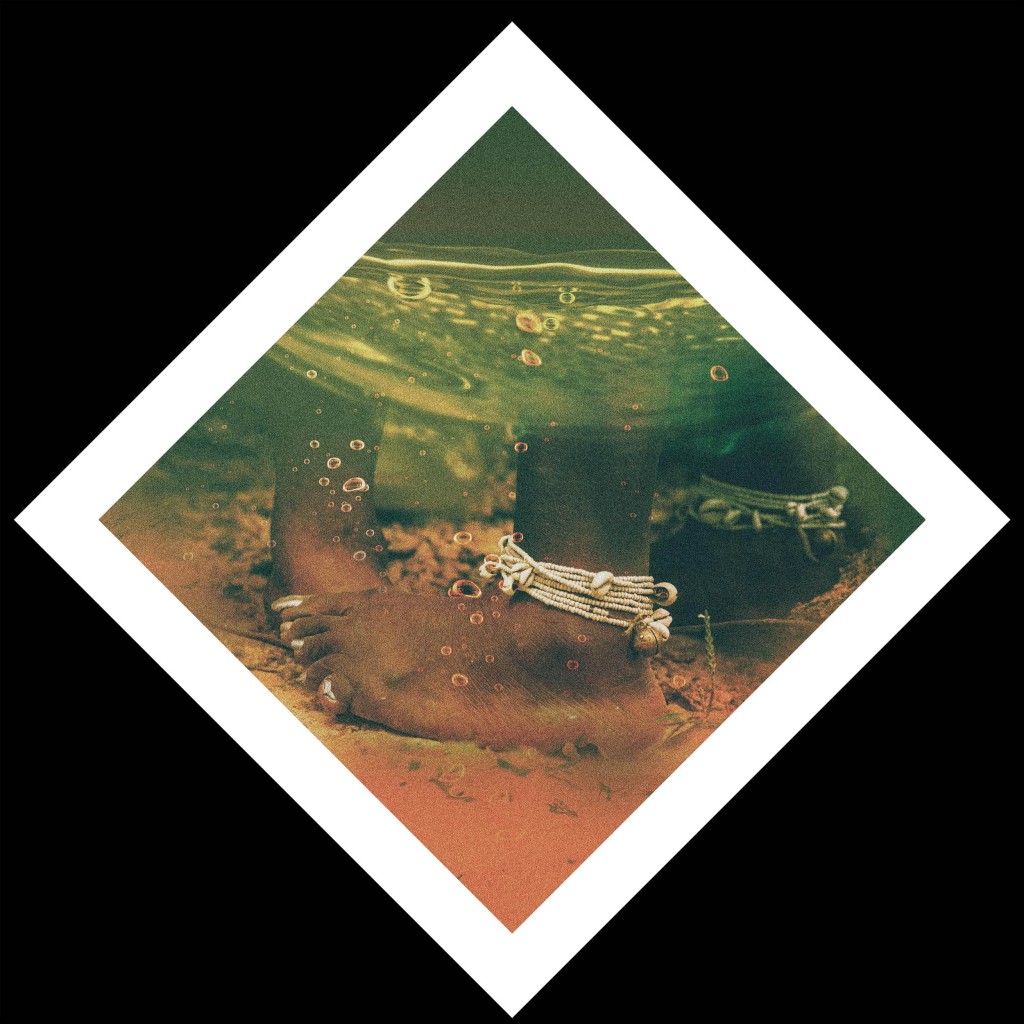
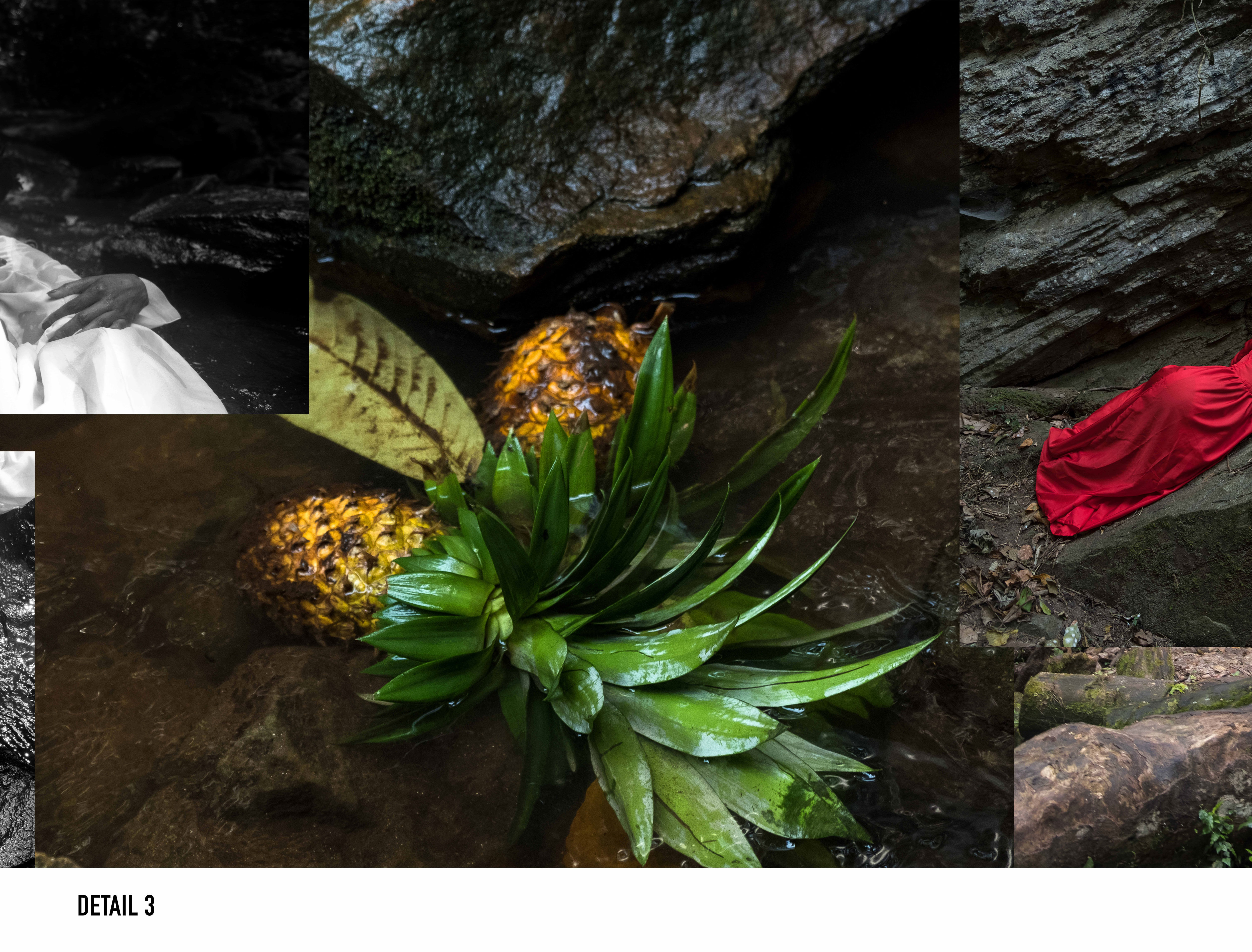
Adeola Olagunju uses self-portraiture, along with the re-staging and interpretation of traditional Yoruba healing rituals, to explore her journey through a near-death experience and to visualize what it means to emerge on the other side. The visuality of these works and their use of memory as a subject can be understood through the operations of the body. The body, as an artistic motif, shaped the way the artist understood both her predicament and her artistic practice. The images communicate themes of trauma, alienation, repression, sacrifice, spirituality, identity, and home.

Olagunju began this body of work after discovering a tumor growing in her throat. Following surgical procedure, she gradually lost the use of her mouth due to temporomandibular joint locking. During this desperate time, she became exposed to layers of belief and faith. Her family guided her through a spiritual procession called irapada, a Yoruba term meaning “redemption.” Irapada is performed primarily for severely ill people as a way of renewing their lives. This practice is common within the so-called white garment churches, such as Cherubim & Seraphim and Celestial churches, as well as within the Yoruba traditional religion.

The performative role of the camera, and the power and control it bestowed on the surrogates—friends, family, and medical officers—who photographed the earlier images of the artist, raises the question of truth. The truth as seen by the surrogates, the camera, and the artist differed. The artist was aware of how the camera altered the subject, the object, and the behavior of those behind it, and of how reality, passing through different layers of perception, culminates in a single truth: a photograph.

Just as a diary often betrays an awareness of its potential to be read by others (Van Dijck 2007: 54), the artist’s body became a diary read by different people through the camera. Not only was the artist’s body read as a diary; it was also written as a photograph. The private experience was simultaneously a public one, shared with and by others—a personal story representative of a collective experience.

The artist later staged a secondary revision of the experience through self-portraiture, employing memory and artistic interpretation. She molded the experience into a language that speaks not only to the mind but also to the emotions. Here, memory serves as a witness to past events. Once again, the camera confronts constructed realities, personal mythologies, and beliefs that produce evidence of a truth. In this way, both memory and photography became subjective modes of recording the past in the present.

© Adeola Olagunju 2014-15

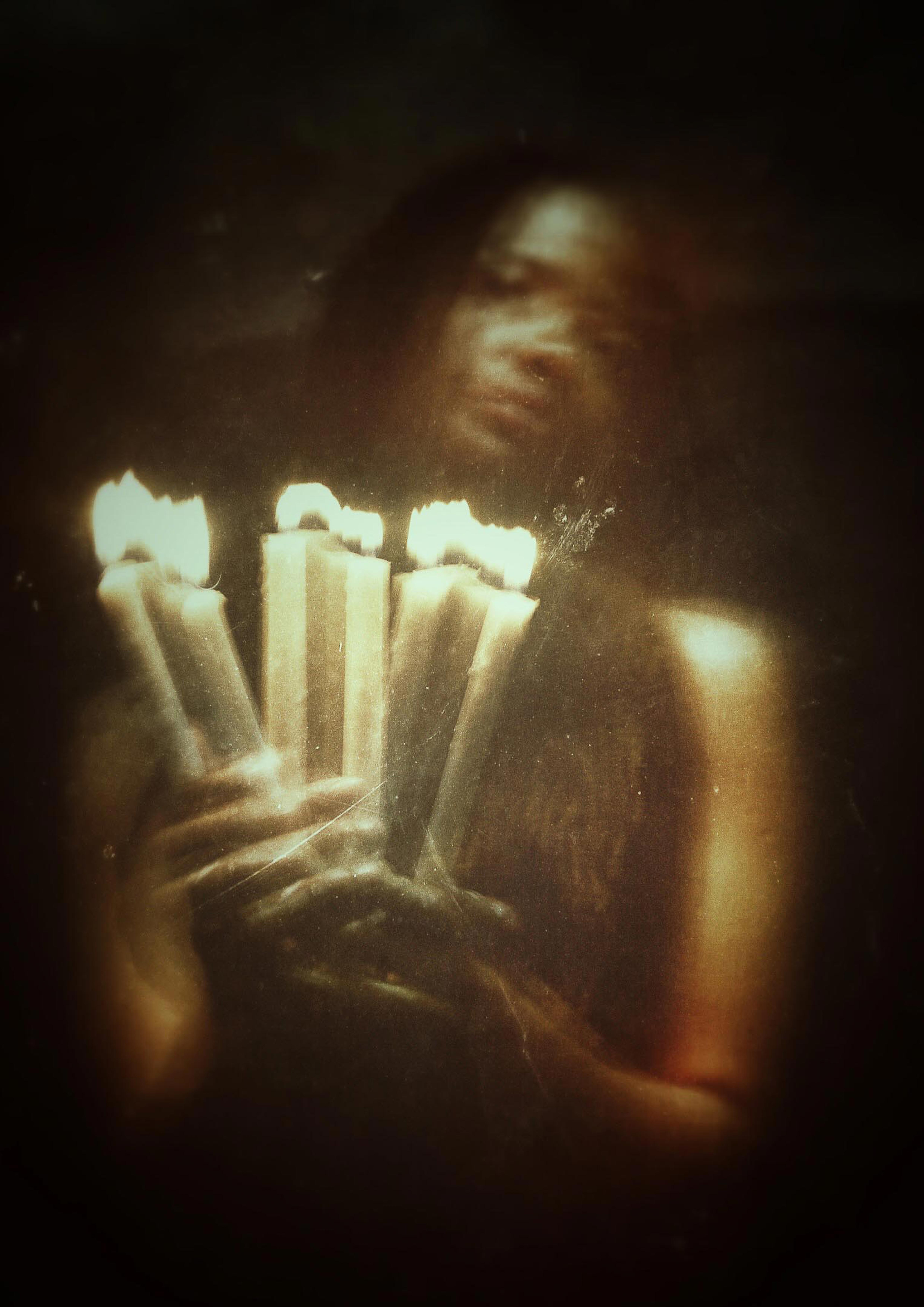
Navigating a Dark Space

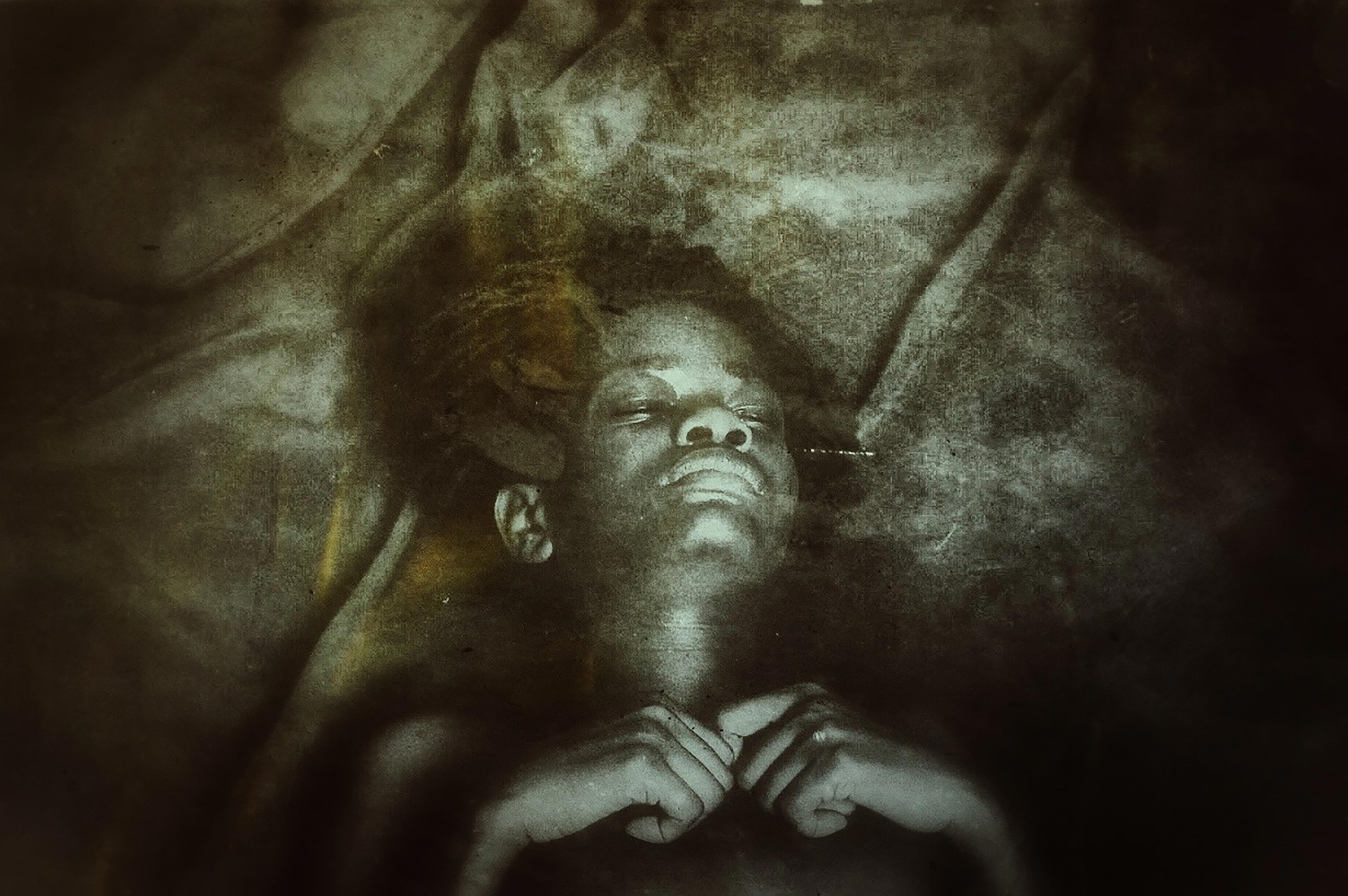
A scar is the means by which a body carries the forgotten residue of memory. In some instances, the body may heal, yet the memory persists. This echoes the Yoruba saying, “Oju apa o le da bi oju ara,” which loosely translates to the idea that a scarred body can never look the same after it has healed—a testament to a form of healing that extends beyond the physical.

Andre Gide once wrote that art begins with resistance, at the precise point where resistance is overcome. But what kind of art emerges not from struggle, but from acceptance?

For me, embracing my own darkness became the measure by which I traced the contours of my fears and vulnerabilities. Through that act, I summoned an inner strength and faith, gradually dispelling the shadows and igniting a light from within.

Navigating a Dark Space is an exploration of that liminal period between the residue of trauma and the search for strength and peace. It is an inquiry into the art shaped not by resistance, but by acceptance.

© Adeola Olagunju 2016

Home Is…
Home Is…

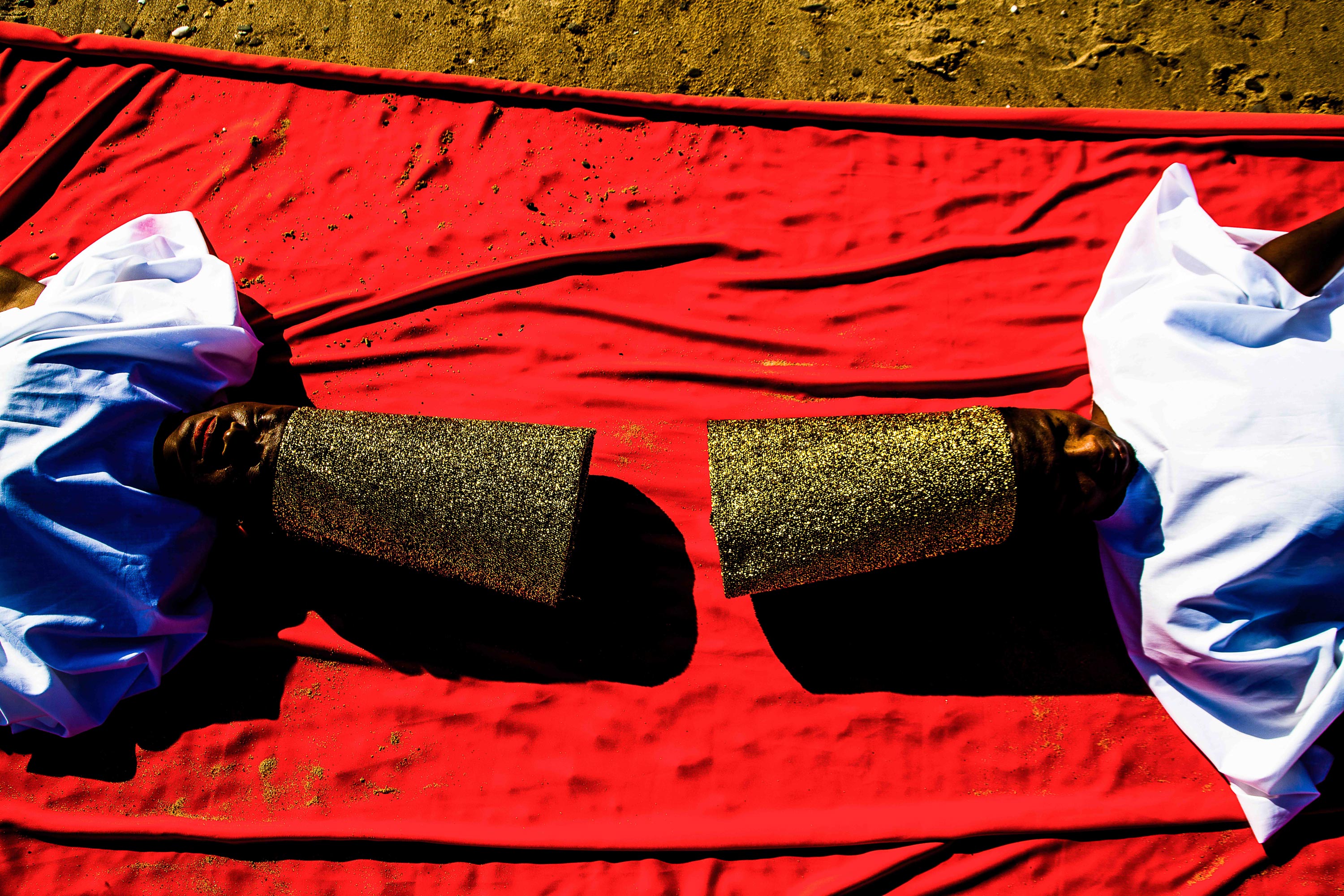
Through portraiture, staged tableaux, and costuming, I use photography to explore and invoke rituals of home and home-making. My project Home Is… (2017) takes the form of performance-based, large-scale color photographs created outside of, yet in relationship to, my home in Nigeria.

Created in Germany, this work borrows from Düsseldorf’s colorful carnival, a celebration held just before Lent, to enact a performance of home rituals. This process became a way to root myself deeply in that new space. I explore identity and belonging in a foreign land, asking how we cultivate a sense of home where non-belonging is prevalent, how we find psychological contentment and acceptance, and whether we are destined always to yearn for what is absent. I have come to see home as a space we carry within and invoke when necessary.

The carnival’s dominant colors, red and white, mirrored those of my Yoruba heritage, where red represents Sango, embodying passion and vitality, while white signifies Yemoja and peace. These colors gave form to the varying emotions I navigated. I incorporated candies distributed during the carnival as a peace offering within my photographic performance.

These echoes in practice across cultures revealed a profound connectedness, a thread of relatedness that my photography seeks to trace.

© Adeola Olagunju 2017

Transmutations
Transmutations

Transmutations (2018-19) is an eight-panel photographic installation that explores the complex landscape of the human psyche, considering the profound transformations that occur within us through the lens of the ancient alchemical principle of Solve et Coagula: the process of dissolution and rebirth. In examining this intricate journey, we confront the vital necessity of dismantling the ego, which often serves as a barrier to our true self, trapping the soul in layers of illusion. This dismantling, while it may bring about a shattering of the familiar self, is essential for the emergence of a purer, truer essence that lies within.

Transmutations trace the stages of this alchemical metamorphosis, charting a course from fragmentation, where the self feels divided and incomplete, to a state of harmony, where integration and balance are achieved. At the zenith of this journey lies the concept of coniunctio, the sacred union of opposites. This is the moment where light and shadow come together in a harmonious dance, revealing the heart as a sanctum of unity. Within this sacred space, the self is experienced as a living presence, a continuous flow of existence rather than a fixed state.

However, this crystallized wholeness is not to be seen as a final destination. Instead, it is a threshold, marking the beginning of a new chapter in the ongoing narrative of the seeker’s life. The reborn Self steps into an endless cycle of dissolution and renewal, a continuous loop where every realization sparks new mysteries to unravel. Each layer of understanding leads to deeper inquiries, and each truth unearthed gives rise to new questions. Transmutations embody a paradox: true wholeness exists not in a static state but in the perpetual act of becoming. The essence of the Self, therefore, is not a singular, fixed entity but a dynamic force, eternally refined through the transactions of rupture and repair, darkness and light.

Ultimately, the human soul itself emerges as the alchemist’s crucible, forever engaged in the process of evolution toward transcendence. Through this intricate photographic exploration, we are invited to celebrate the complexities of the human experience, recognizing that within the journey of transmutations lies the true beauty of life itself.

Born Throw Way!
Born Throw Way!

Born throw way!  is a Nigerian Pidgin English loosely translated: A child that is born and thrown away. Someone who is rejected from the family or societal structure or anyone whose life transgresses against the popular norm.

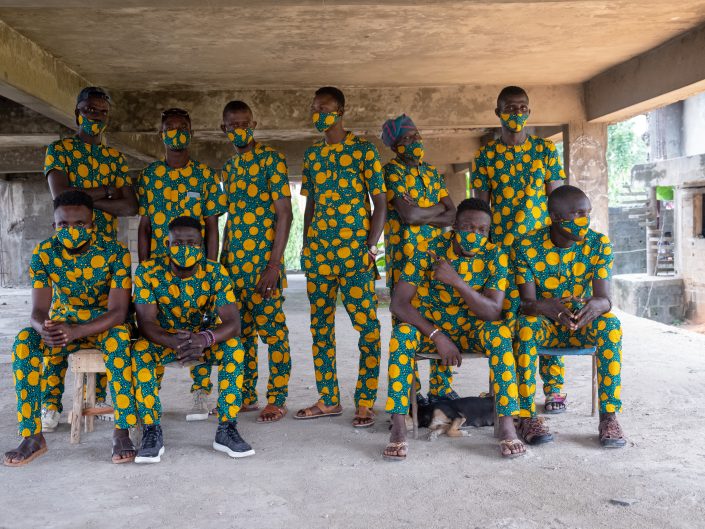
Born throw way! is a multimedia installation featuring video, photography, sound and illustrations printed on fabric. This project explores the community of loosely organized street gangs in Lagos, Nigeria known as “Area Boys”. By delving into the subculture and counterculture, I examine the symbolic approaches to humans-as-waste and how the social is ascribed a corporeality so an “Other” is cast as polluting, expendable and rendered “matter out of place” or abject. My interest lies in interpreting the self-other dimension of interactions in the city of Lagos where the violence of structural marginalisation is seen as a positive means of social purification.

I looked intimately at the day-to-day lives of the “Boys” and their generative use of self-created language, expressions and slangs to consolidate, promote and reinforce their ideological interests. Likewise, the improvised and unofficial realms they occupy and the power structures that sustains their ecosystem.

The collective identity of “Area boys” is also explored through fabrics and clothing, this is rooted in the ideology and the age-long practice of the Yoruba people of Nigeria. Here, the fraternity that exists among wearers of “and co” (which means uniform) is belonging, acceptance and community; no matter how transient. The creation of the uniform for this project was collaboratively achieved between myself as the artist and the subjects in my work. While I selected the fabric, the “Boys” chose the tailor and influenced the style which was made, this co-creative dialogue preserves their personal agency and authority over how they want to be seen and presented.

Born Throw Way! was developed within the framework of  Forecast–Skills e.V. Berlin, Germany.

Adéọlá Ọlágúnjú ©  2020-2021


© Copyright Adéọlá Ọlágúnjú 2026