

Rhizome
Rhizome (2025) operationalizes Carl Jung’s metaphorical proposition that “life has always seemed to me like a plant that lives on its rhizome. It’s true life is invisible, hidden in the rhizome… What we see is the blossom, which passes. The rhizome remains.” The work explores textiles as dense contexts and interwoven narratives stitched together to form a singular body. Each constituent fabric functions as a unique “blossom”—a tangible aesthetic manifestation replete with its own microhistory, a narrative encoded in its materiality and technique. Through varying dyeing, stitching, and image transfer techniques, Rhizome articulates the migratory patterns of artisanal knowledge across cultural and temporal boundaries. Thus, while each textile retains its autonomous narrative, it is subsumed within the larger work, revealing latent, subterranean connections and a conceptual rhizome. This rhizomatic web uncovers invisible histories of labor and transcultural exchange, situating meaning within the interstitial spaces that these stitched connections both create and occupy.
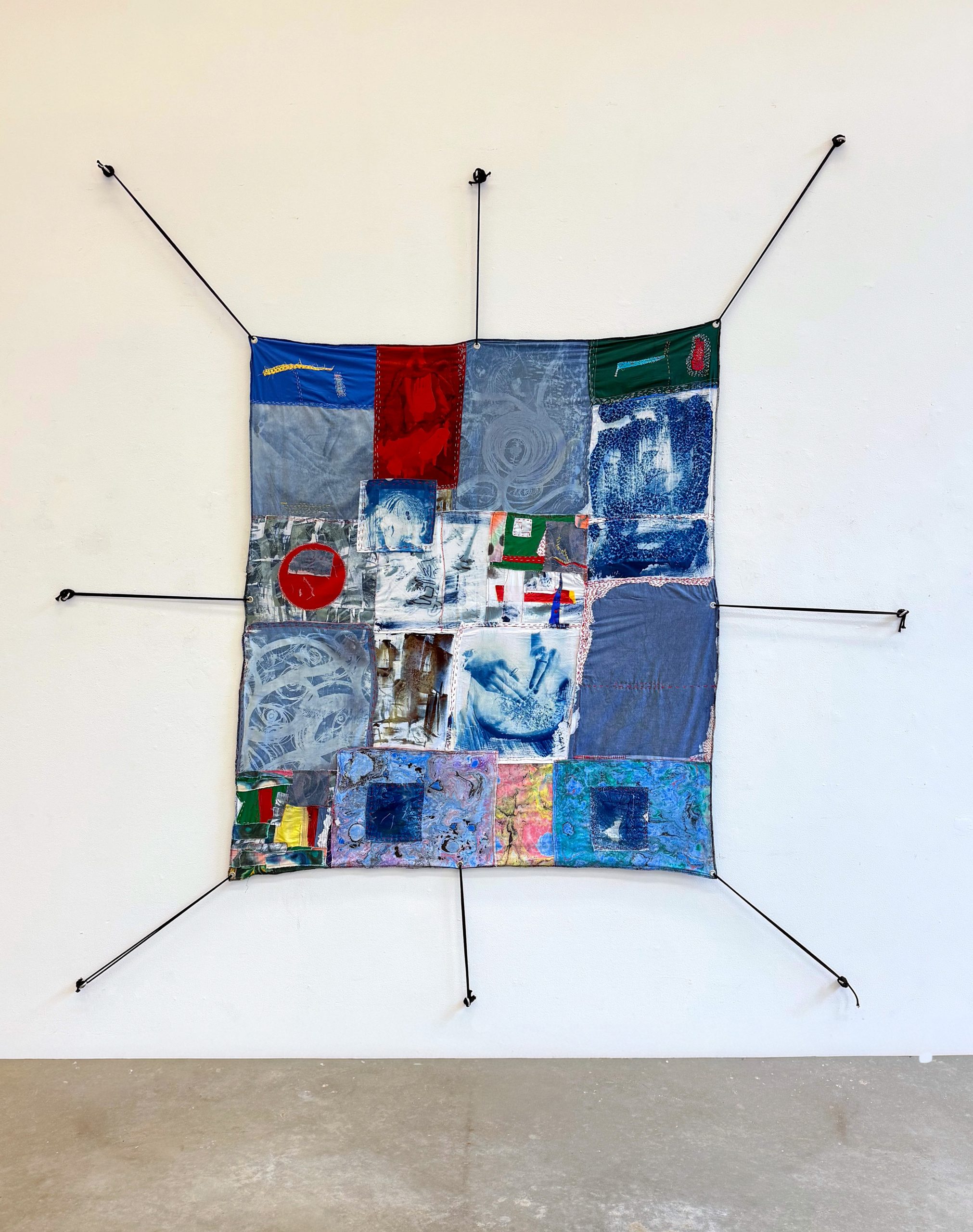
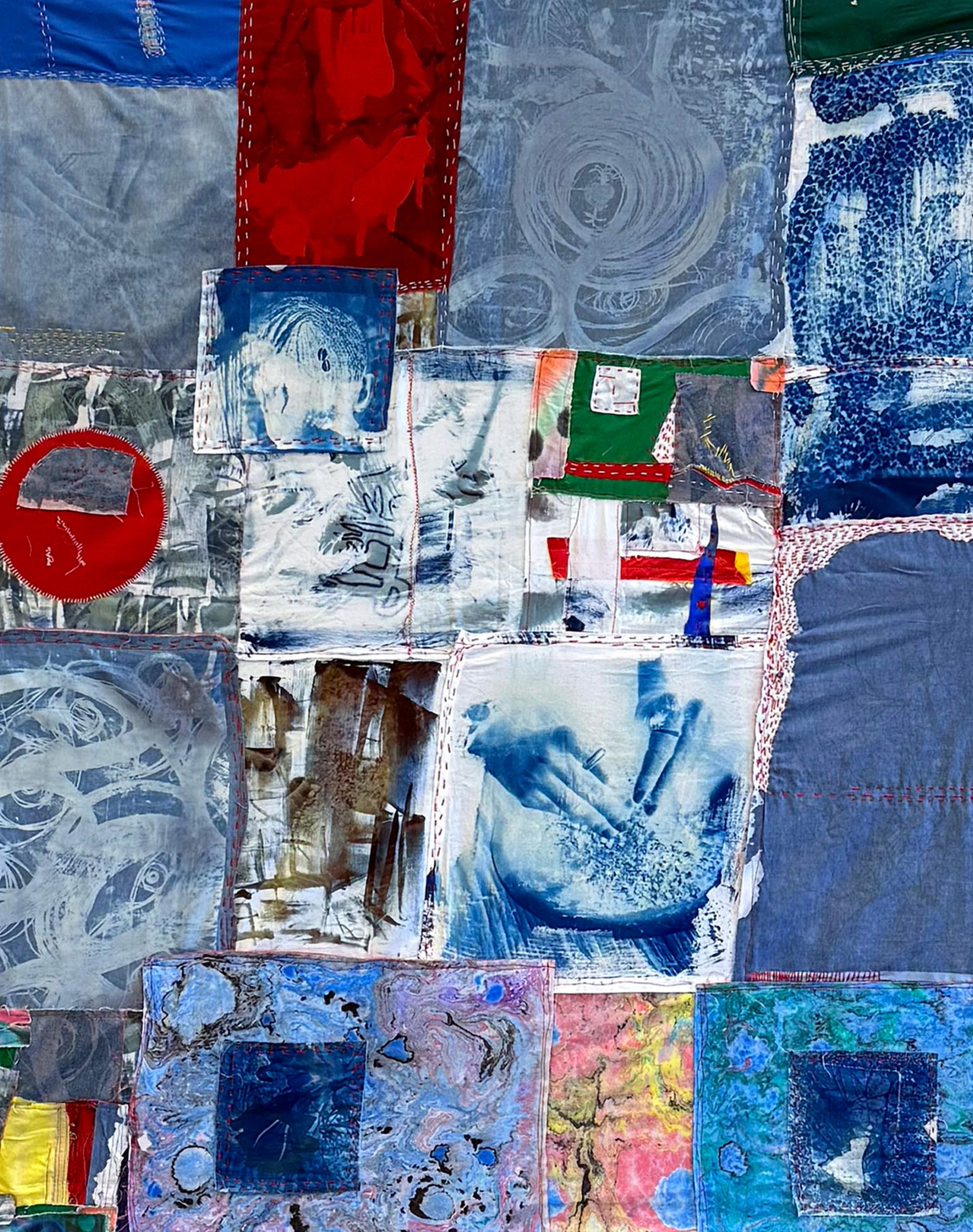
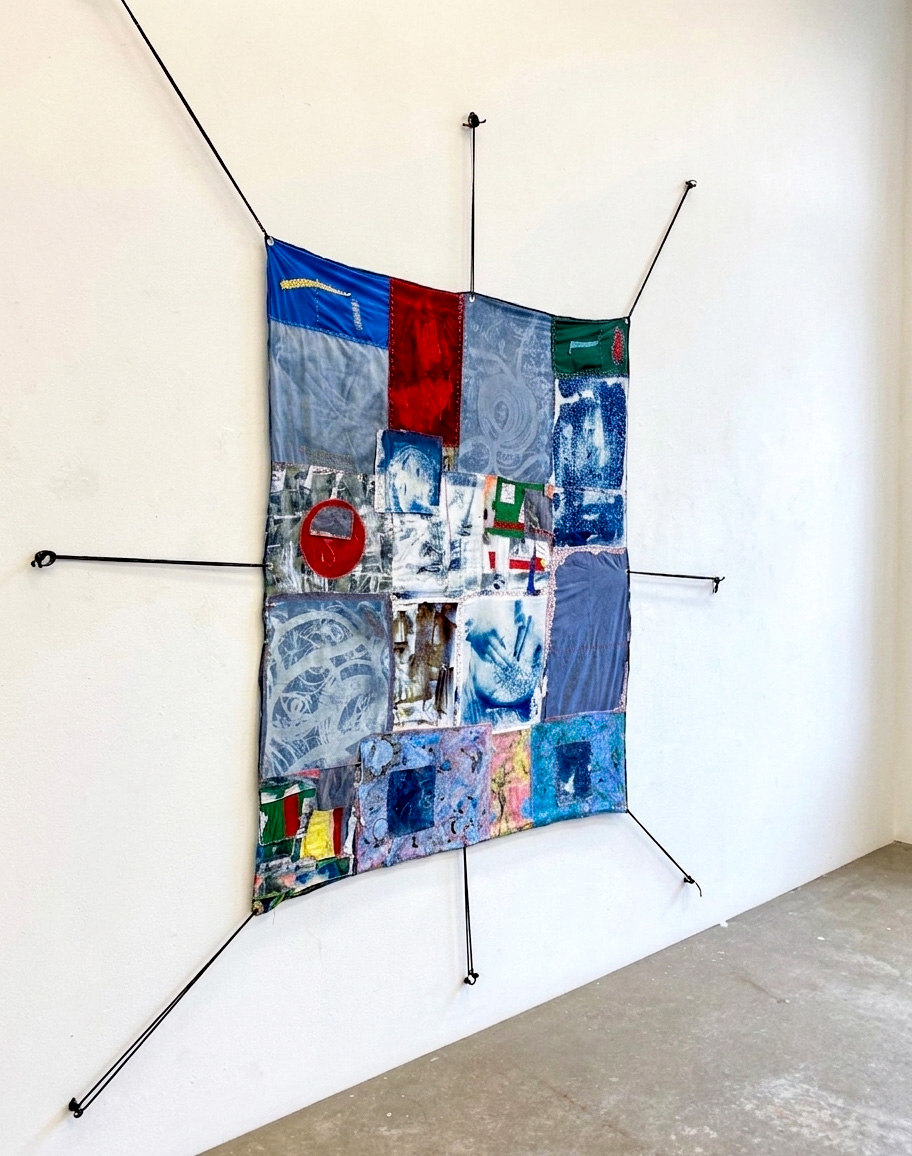
Rhizome (2025), Hand-dyed & hand-stitched fabrics, drawing & Photo transfer, monotype and cyanotype, rope , 178.3 x 160.8 cm.